Finding Yourself in the Past: Who Were You Then?
July 1, 2026 - Reading time: 6 minutes
Look at an old photo, reread a forgotten letter, or take down a book from your childhood. There, in that distant and half-forgotten past, someone writes, hopes, worries, waits, longs to escape, and dreams of what is still to come. Recall desires you once carried. Was that person truly you?
Have you ever felt that reading your old words is more fascinating than the present itself? That the person who lived twenty or forty years ago seems almost like a stranger?
Back then, life seemed to burn with intensity. A single phrase could spoil an entire week. One conversation could feel like the end of life itself, while a chance encounter could suddenly fill the future with hope.
We lived within our thoughts. We wandered through them, returned to them endlessly, built plans around them, and shaped our lives through them.
And yet, something changes with time. The inner world often grows quieter, almost still. The eyes see different landscapes now. Great trees that once towered above us seem smaller. Familiar places acquire a strange, almost unfamiliar appearance. The mind fills with memories—fragments of the past gazing back at one another.
But where is that important day now?
At the time, it felt utterly real: the morning road, the voice in the garden, the decisive conversation. Everything seemed vivid, dense, undeniable.
Years pass, and all that remains is a single compressed memory, like a pomegranate containing countless seeds hidden within a single fruit.
Philosophy asks a curious question: How can we prove to ourselves that the past was real? That you were truly you?
Science offers a simple answer. Memory is not a video recording. The brain does not preserve every detail of our lives. Instead, it retains what appears important for the future: lessons learned, dangers avoided, pain endured, hopes fulfilled, and conclusions drawn.
What is truly remarkable is that if many of our memories were to vanish, our external lives would change very little.
We do not remember thousands of breakfasts, ordinary walks, trips to the store, casual conversations, anxious expectations, or accidental encounters.
Yet all of those moments existed.
Life can be compared to reading a book. While we are immersed in a compelling story, each chapter feels like a small life of its own. We experience the joys and sorrows of its characters almost as if they were our own. We wait eagerly to discover what comes next.
Then the book ends. We close it, take a breath, and return to ourselves. The story disappears, yet something remains.
Not every page is remembered. What lingers is an aftertaste — a subtle residue of meaning.
And when we begin another book, we are no longer exactly the same person who opened the first one. The experience has already changed us.
Life works in much the same way. Most days fade from memory, yet they leave behind traces of meaning. Over time, these traces accumulate, gradually forming what you call You—the person who exists in the present moment, the You of Now.
If a person inhabits a rich and growing inner world, these accumulated meanings can make them deeper, more attentive, and more compassionate.
But the greatest mystery remains. Why do we have these thoughts at all? Where do they come from? Why is an entire lifetime gathered within us, only for so much of it eventually to disappear?
When you reflect on your own past, do you truly feel that the person you once were is still you? Or was that someone else entirely?
The cells of your body have been replaced countless times. Every night, another day slips away, taking with it millions of moments that will never return. Yet something remains.
Something still makes up You.
Yes, many years ago, it truly was you — but you had not yet learned the language of meaning. You had only the raw experiences of life, waiting to be transformed into wisdom.
Like a deep-sea diver descending into the dense waters of the Universe, your soul entered this world in search of a hidden treasure. That treasure was never gold or power, but understanding, compassion, love, and the wisdom that can be earned only by living. Every joy and every sorrow, every triumph and every loss, became another precious gem gathered along the way. Through this endless stream of moments, you were gradually shaped into the person you are today.
You arrived equipped with everything needed to survive, but not with what truly matters. The deepest meaning of your existence cannot be given — it must be discovered. Wisdom cannot be inherited — it must be lived. These are the treasures your soul collects throughout its earthly journey.
And when your journey is complete, it is not your possessions, your achievements, or even your memories that you carry home. It is the invisible wealth you have gathered within yourself — the love you have awakened, the truth you have recognized, and the consciousness you have expanded. That is the treasure you bring back when you return to the place from which you came.
- Link to the video: Finding Yourself in the Past. Who were you?
- Style: Scientific Neo-Romanticism
Written for the YouTube channel "Designed World" by S. V. Chekanov
Comment
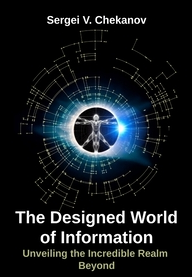
This is the full transcript of the YouTube video "Finding Yourself in the Past. Who were you?” in the Scientific Neo-Romanticism style created by the Designed World channel using the book “ The Designed World of Information: Unveiling the Incredible Realm Beyond ”, by Dr. Sergei V. Chekanov, 466 pages, ISBN: 9798990642836; Hardcover 9798990642843, eBook ISBN 9798990642829; Book webpage: https://ermislearn.org/designed-world/
Ads help maintain this website.