[Digital] Science
The Mathematical Universe
January 24, 2026 Reading time: 3 minutes

You find yourself in this universe. Beneath its surface, natural laws — forged with astonishing precision. They co-exist in a delicate balance, interlocking one another. They make your appearance possible.
We uncover these laws through abstract ideas of mathematics. They manifest to us as traces of a deeper blueprint, or a hidden order that binds reality together. Simple formulas describe the workings of the cosmos, and this simplicity itself is puzzling. Why are these laws so elegant, so compact, so easily grasped? Long before experimental confirmation, these formulas often exist as pure abstractions, waiting to be recognized.
Why MDPI Is Not a Predatory Publisher
January 14, 2026 Reading time: 8 minutes
From time to time, one hears the claim that MDPI (https://www.mdpi.com/) is a "predatory journal". I would like to state clearly at the outset that, according to any reasonable metric, MDPI does not meet the definition of a predatory publisher. The main reason it is often perceived as such is that it operates under a different funding and publishing model than traditional subscription-based journals, which makes it stand out from long-established publishers.
Below, I address the most common characteristics of predatory journals and explain why they do not apply to MDPI.
Quantum Entangled Lives
October 31, 2025 Reading time: 9 minutes

YouTube video "Our Quantum Entangled Lives".
If you know a bit about science, you've probably heard of one of its most fascinating phenomena: quantum entanglement. It's the kind of thing that makes even scientists pause and ask, "How can this be possible?"
Let's break it down. Imagine two separate microscopic particles, each with its own measurable properties-like energy and charge. Now, suppose we bring them together and make them interact. In that moment, a new quantum system emerges-one that can no longer be described simply by the individual properties of each particle. Their states become linked in such a way that measuring one instantly influences the other, regardless of how distant they may become.
Scientists and Belief
September 2, 2025 Reading time: 4 minutes

Introduction to the video "Science and Belief".
Maybe you've encountered a question like this: How can scientists believe in God, spirituality, or anything that doesn't seem scientific?
The answer is simple: we all believe in something. Scientists are no exception. While they trust scientific results, they also recognize that truth is not revealed by science alone. Many aspects of human experience lie outside the scope of science, yet they may still be real and shown to be true.
Unknowable Universes
August 14, 2025 Reading time: 6 minutes

YouTube Video Unknowable Universes
The laws of nature reveal astonishing beauty. Everyone knows the famous equation that links energy to mass-energy equals mass times the speed of light squared. Who doesn't? Scientists have measured this relation with extraordinary precision - within about 0.00004%, or roughly one part in 2.5 million.
The deeper question, however, is this: why does this formula look so simple? It's no more complicated than calculating the area of a circle, which equals π times a radius squared, where the constant π is known with extraordinary accuracy. This equation is exact; the only limitation lies in our ability to measure the radius. Why is it that the most fundamental equations governing our universe-the ones shaping reality itself-are often the simplest? In fact, the key laws that define our world, like those of gravity and electromagnetism, are remarkably straightforward. While some laws appear more complex, their role in shaping the universe is comparatively less significant.
When the Mirror Looks Back
July 15, 2025 Reading time: 8 minutes

Introduction to the video story When the Mirror Looks Back.
Of course, you know you're self-aware. Who doesn't? You approach a mirror and find yourself staring back, grasping the profound strangeness of existence - A biological being reflects photons - light bounces off the glass, enters the eyes, and floods the brain with information, triggering an infinitely complex process that becomes the realization of this miracle. You can recognize the one standing before the mirror. It is you. And, even more - there are rare moments in life when you pause and ask: Who am I? What does all of this mean?
The Quantum Fields Inside Us
June 20, 2025 Reading time: 5 minutes

Introduction to the story "The Quantum Fields Inside Us".
Our bodies are built as astonishing hierarchies of complex structures. We consist of different types of cells, each performing specialized tasks. These cells are composed of intricate nanomachines - long chains of molecules that carry out the essential functions of life.
Molecules themselves are built from atoms, which in turn are made up of nuclei and electrons. The nuclei consist of protons and neutrons, and these particles are composed of even smaller components: quarks and gluons.
Fields — the Invisible Architecture of the Universe
June 12, 2025 Reading time: 6 minutes
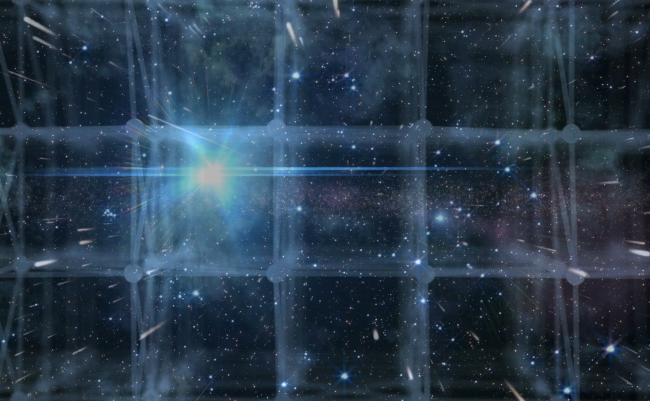
Introduction to YouTube video "Fields — the Invisible Architecture of the Universe".
This world is full of wonder. Attempts to understand the universe reveal a startling realization: the forces that govern its atoms and molecules remain, in many ways, beyond our full understanding. Science discovers how one phenomenon influences another, how different parts interact and connect. But what remains elusive is the deeper origin of the mechanism that links everything together.
This is the astonishing fact that you may not know: if we gathered all 8 billion people and removed the empty space within the atoms that make up our bodies, the remaining volume would fit inside a sugar cube - just about one cubic centimeter. This would be nuclear matter, similar to what exists in neutron stars. This is because 99.99% of an atom is just empty space.
Ads help maintain this website.